
Collaboration
.jpg?sfvrsn=8c296448_3 "Malaria in Viet Nam") Since its launch in 2005, the Geospatial Health and Development Team, The Kids Research Institute, Australia, through the Malaria Atlas Project contributed with robust data and analytics architecture built over two decades, integrating diverse data sources, applying advanced geospatial and statistical modelling, and maintaining a comprehensive global malaria data repository. Thanks to their role as WHO Collaborating Centre in Geospatial Disease Modelling since 2022, WHO has benefited from their strong technical capacity in epidemiological modelling, uncertainty analysis and reproducible workflows brought cutting‑edge analytical expertise to the collaboration.
Since its launch in 2005, the Geospatial Health and Development Team, The Kids Research Institute, Australia, through the Malaria Atlas Project contributed with robust data and analytics architecture built over two decades, integrating diverse data sources, applying advanced geospatial and statistical modelling, and maintaining a comprehensive global malaria data repository. Thanks to their role as WHO Collaborating Centre in Geospatial Disease Modelling since 2022, WHO has benefited from their strong technical capacity in epidemiological modelling, uncertainty analysis and reproducible workflows brought cutting‑edge analytical expertise to the collaboration.
WHO provided normative leadership, global coordination and policy translation capacity, ensuring that analytical work is aligned with Member State needs and fed directly into global strategies, guidance and reporting. Its role included setting the policy framework, maintaining methodological oversight, facilitating access to official country data, convening Member States and expert groups, and creating the platform through which analytical outputs could inform global recommendations.
Together, these strengths ensured that the joint work was scientifically robust, policy‑relevant and operationally useful for decision‑making.
Contributions
The centre has supported WHO’s work for more than a decade, contributing core analytical inputs to the annual World Malaria Report. This collaboration has included the yearly production of malaria burden estimates for highburden countries in subSaharan Africa and estimates of intervention coverage, such as insecticide‑treated bed nets and other key malaria control tools.
The centre has also provided direct support to national malaria programmes, particularly through geospatial analytics for risk stratification under the High Burden High Impact initiative.
Together, these contributions have enabled WHO to track progress toward global malaria reduction goals and to align monitoring with the Sustainable Development Goals and the Global Technical Strategy for Malaria, ensuring that global reporting and guidance are grounded in robust, policy‑relevant evidence.
Knowledge transfer
The collaboration strengthened WHO’s ability to refine its methods for estimating malaria burden, ultimately benefiting Member States by expanding access to advanced geospatial modelling that pinpoints where interventions are most needed and supports strategic planning at both national and global levels.
For the centre, the partnership has been central to its work over the past decade, providing access to leading global malaria policy expertise, facilitating engagement with national malaria control programmes, and creating a direct route for its data and analytical capacity to generate impact internationally. 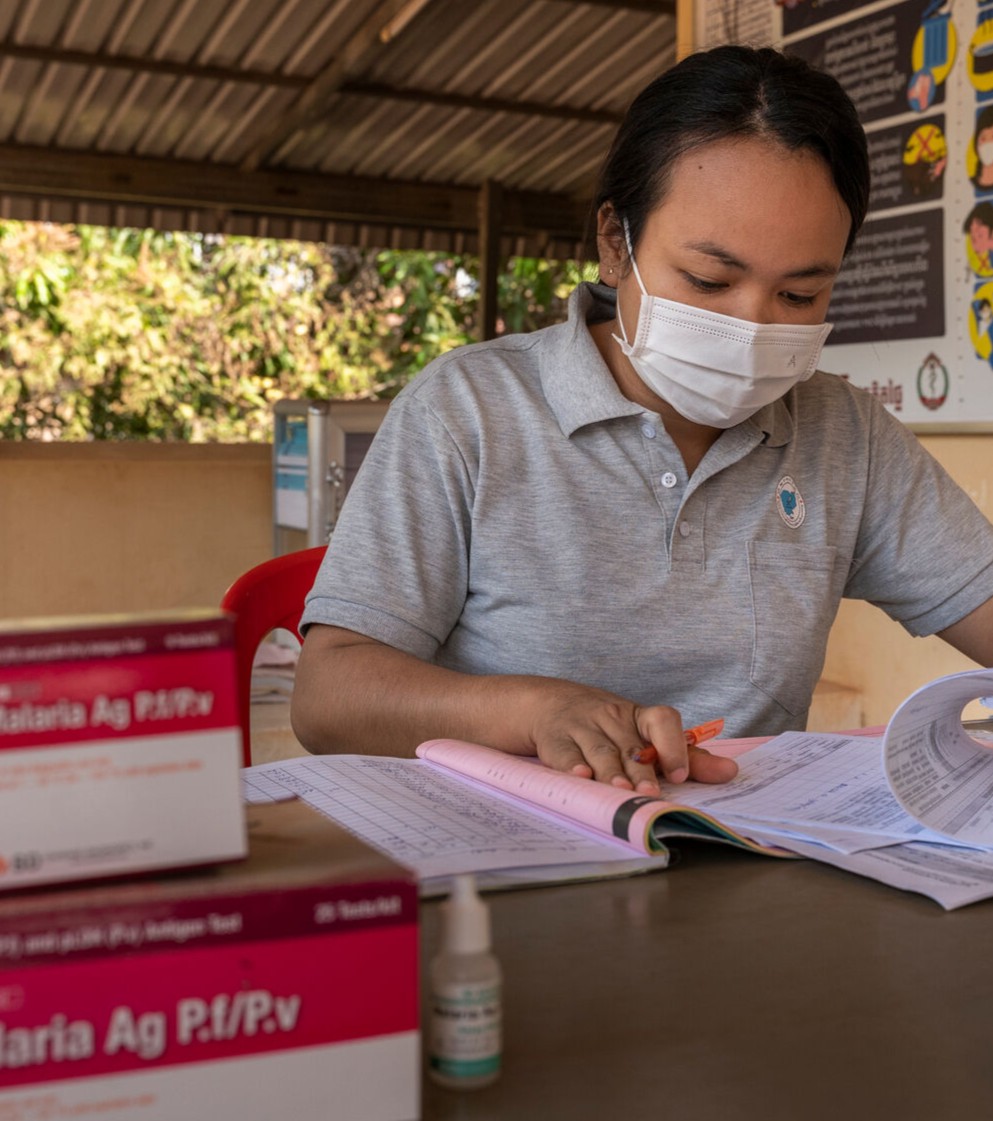
This joint effort has also produced clear benefits for the wider malaria community: by generating a robust, spatially detailed picture of global malaria burden and how it evolves over time, the collaborating centre has supplied essential evidence for shaping international malaria policy, guiding resource allocation toward the highest‑need populations, and assessing progress against global targets, including where efforts are on track and where intensified focus is required.
The collaboration also helped build new capacity, skills and ways of working on both sides. For WHO, joint work with the centre strengthened analytical approaches and enhanced staff technical skills, including refining modelling methods reviewed by the Malaria Strategic Information Technical Advisory Group and improving how diagnostic data, health‑seeking behaviour, new interventions and evolving net types are incorporated into burden estimation.
For the centre, a decade of close engagement with WHO exposed team members deepened their understanding of the operational realities of malaria control and informed the development of its own approaches to partnership and field engagement.
Opportunities exist to expand the collaboration, including additional capacity-building activities that would enable Member States to perform standardized geospatial modelling and generate their own burden of disease estimates.